
How to Choose a Custom Software Development Company in India (2027)
A practical guide for Indian founders on evaluating software vendors. Learn about real costs, timelines, red flags, and the right questions to ask before you sign.

By Prabhat Patra
Updated on Nov 16, 2026
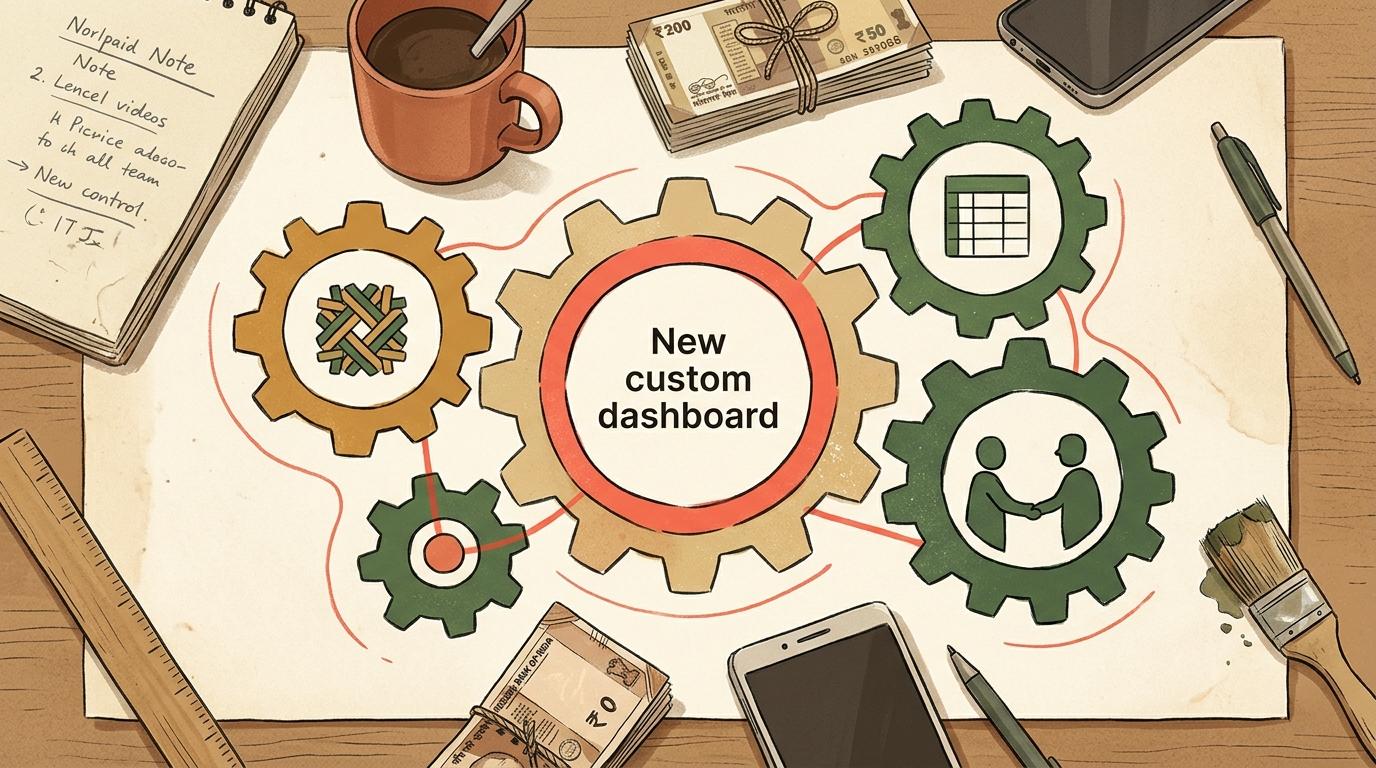
Table of contents
How much should custom software development cost in India?
For a serious business application, budget at least ₹5–8 lakh as a starting point. A simple, focused internal tool might start around ₹1–3 lakh, while complex web platforms can easily range from ₹25 to ₹60 lakh or more.
Stop thinking about cost in a vacuum. The price tag is a function of team size, complexity, and timeline. In our experience building custom software, quotes are often misleading because they hide these variables. What you really need to understand are the underlying rates and what you get for them.
Typical Developer Rates (2027)
Here’s what you can expect to pay for talent from a professional product studio in India, based on current market data. Freelancer rates can be lower, but often come with higher project management overhead on your side.
Mid-level Developers (2–5 years): $25–$45/hour
Senior Developers (5–8 years): $40–$65/hour
Lead/Architect (8+ years): $60–$80+/hour
Specialists in fields like AI/ML can command 25-40% higher rates. A balanced team with a mix of senior and mid-level talent is usually the most effective, as it prevents bottlenecks without inflating the cost.
Project-Based Cost Estimates
If you have a clear scope, many teams can give you a project-based price. Here are some realistic ballpark figures for 2027:
MVP / Proof of Concept: ₹6.5 lakh – ₹16 lakh. This is for a first version with core functionality, designed to test a market hypothesis. The MVP development cost in India depends heavily on how focused you can keep that first version.
Custom Internal Dashboard: ₹4 lakh – ₹12 lakh. For example, a dashboard that pulls data from your payment gateway, CRM, and support tool to give you a single view of operations.
Full Mobile App (iOS & Android): ₹12 lakh – ₹32 lakh.
Remember to budget for post-launch costs. A good rule of thumb is to set aside 15-20% of the initial development cost per year for maintenance, hosting, and minor updates.
What's a realistic timeline for building custom software?
A focused, single-purpose build can be delivered in 2–4 weeks, while a more complex business application or mobile app will likely take 3–6 months. Anything quoted faster than that for a significant project is a red flag for rushed work and poor quality.
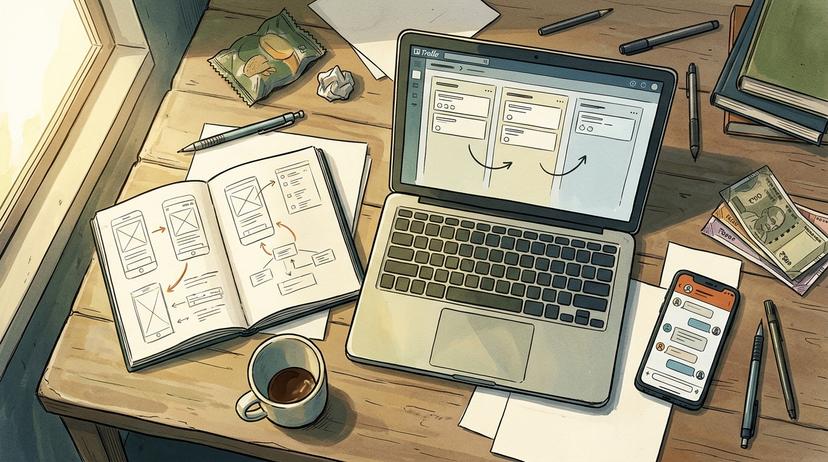
Timelines are almost always broken by a vague initial scope. The single best way to prevent this is to insist on a paid discovery or scoping phase. This is a small, 2-4 week fixed-scope project where the tech partner works with you to:
Map out the exact user workflows.
Identify all the data sources and APIs to connect.
Create wireframes for the key screens.
Produce a detailed, phased project plan and a reliable cost estimate.
This de-risks the entire project. You walk away with a concrete plan that you can take to any development team, and the team you're evaluating gets to prove they understand your business before you sign a massive contract.
Fixed Price vs. Time & Materials: Which is better?
A fixed-price contract works well for small projects with a crystal-clear, unchanging scope. For anything larger or more complex, a Time & Materials (T&M) model provides the flexibility you'll almost certainly need.
Here’s the trade-off:
Fixed Price: Predictable budget, but rigid. Any change, no matter how small, requires a change order, which adds administrative overhead and can strain the relationship. It incentivises the vendor to do the bare minimum to meet the letter of the contract.
Time & Materials (T&M): Flexible and adaptable. You pay for the actual hours worked, which is ideal when requirements are evolving. This model fosters a more collaborative partnership, as the team is focused on delivering the best outcome, not just checking off a list. The risk is budget overrun if the scope isn't managed well.
Honestly, a hybrid approach is often best. Use a fixed-price contract for the initial 2-4 week discovery phase. Once the scope is clearly defined, you can either move to a fixed price for the first major milestone (like an MVP) or switch to a T&M model with a weekly budget cap and transparent reporting.
What are the biggest red flags when hiring a software vendor?
The biggest red flags are vague proposals, providing a quote without asking dozens of questions about your business, and hesitation to confirm in writing that you own the code. A slick sales deck means nothing if the fundamentals are wrong.
Watch out for these common mistakes:
The Instant Quote: If a company gives you a price after one 30-minute call, run. A professional team needs to understand your workflows, existing tools, and business goals. They should be asking *you* more questions than you ask them.
The “Yes” Team: A good tech partner pushes back. They challenge your assumptions and suggest simpler, more effective ways to achieve your goals. A team that just says “yes” to every feature request is setting you up for scope creep and a bloated, unusable product.
No Access to the Team: You should be able to speak directly with the project manager and senior developer who will *actually* be building your software. If you're only allowed to talk to a salesperson, that’s a major red flag about their process and transparency.
Unverifiable Portfolio: “We’ve worked with leading brands” is not a portfolio. Ask for specific examples of projects similar to yours in complexity or industry. For our client Apexis Pro, a construction SaaS, we can show the exact RFI and snagging modules we built for their ₹4,00,000 project. That's real proof.
Focus on Technology, Not Problems: A vendor obsessed with a specific tech stack (“We only build with Next.js and MongoDB”) is a sign they’re fitting your problem to their solution, not the other way around. A true partner is technology-agnostic and picks the right tool for your specific job.
How do I find a good custom software development company in India?
Look for a tech partner with a relevant portfolio, a transparent process, and a team that wants to understand your business goals, not just a feature list. You’re not hiring a pair of hands; you’re hiring a product team that can think for itself.
Shift your mindset from finding a “vendor” to finding a “partner.” Here’s what that looks like in practice:
1. They Act Like a Product Studio, Not an Agency
An agency takes orders. A product studio takes ownership. They should feel like an extension of your own team, focused on the business outcome. They’ll have strong opinions on what to build first, what to cut, and how to get to a v1 in weeks, not months. This is critical for projects like MVP development where speed and focus are everything.
2. They Connect Your Tools, Not Replace Them
One of the biggest fears for operations leads is disruption. A good partner understands that your team already relies on tools like Google Sheets, Zoho, Slack, or a legacy CRM. Their first instinct should be to build on top of and connect these systems, not force you to migrate to an entirely new platform. This drastically lowers the adoption risk because the new software fits into existing workflows.
3. Their Process is Built on Transparency
What does transparency actually mean? It means you get:
Weekly Releases: You should see and test new code every single week. No disappearing for a month and coming back with a “big reveal.”
Shared Project Management Tools: You should have read-only or full access to their Jira, Asana, or Trello board. You need to see progress (and roadblocks) in real-time.
Direct Communication: A shared Slack channel with the entire project team, not just an account manager.
4. They Have Verifiable, In-House Projects
Look for a team that has built and launched its own products, not just client work. For example, our team at Rhinon Labs built FurrCircle, a complete pet-parent app, entirely in-house. This proves they understand the full product lifecycle, from idea to deployment and maintenance—something a pure-play service agency often lacks.
What specific questions should I ask before signing a contract?
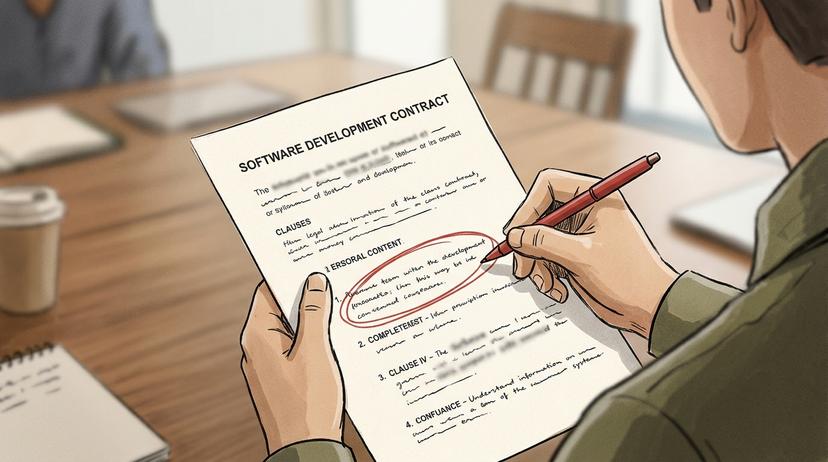
Before you sign, ask who exactly will be on your team, how they handle scope changes, and to see the contract clause confirming you own 100% of the code. The answers to these questions are far more important than the hourly rate.
Here is a checklist of questions to run through with your top 2-3 candidates:
Who is on the team? Can I see their profiles and speak with the project lead before we start?
How do you handle scope creep? What is the formal process for when I request a new feature or a change to an existing one?
What does your release cycle look like? Do you deploy to a staging server for us to test every week?
Can you confirm in the contract that we own 100% of the source code, designs, and infrastructure accounts upon final payment? (The answer must be an unequivocal yes. This protects you from vendor lock-in).
What does post-launch support and maintenance look like? Is there a warranty period for bug fixes? What are the costs for an ongoing retainer?
How do we communicate? Will we have a shared Slack channel? Who is my primary point of contact for day-to-day questions?
Can you show me a project you built that involved connecting multiple third-party APIs? (This is a great test of their ability to work with existing systems, like we did for the SR Fitout admin dashboard, which integrated their lead forms and project management tools).
Choosing a tech partner is a big decision, but it doesn't have to be a leap of faith. The right team will welcome these questions and have clear, confident answers.
If you're an ops lead or founder drowning in spreadsheets and looking to build a custom dashboard, automation, or MVP, the process can feel overwhelming. You don't need a vague sales pitch; you need a clear, actionable plan.
If you want a second opinion from a product team that builds and ships software every day, book a free, no-obligation scoping call with us. We'll help you define the scope for a focused first version you can build in weeks, not months—a plan you can use whether you decide to work with us or not.
Frequently asked questions
A software agency typically executes on a predefined list of features provided by the client. A product studio acts more like a strategic tech partner, helping you define the strategy, prioritize features, and build the product end-to-end, often taking a more opinionated, outcome-driven approach.
Ask the vendor about their quality assurance (QA) process. They should have dedicated QA engineers, automated testing, and a peer-review process for all code. Also, ensure your contract includes a warranty period (e.g., 30-90 days) post-launch for fixing any bugs free of charge.
No, you don't necessarily need a technical co-founder. A good tech partner or product studio can fill that gap, providing not just development but also technical strategy and product management. However, you will still need to be deeply involved as the product owner to provide business context and make key decisions.
Expect to dedicate at least 5-10 hours per week. Your role will be to answer questions, provide feedback on weekly releases, and make strategic decisions. The more available you are to the development team, the faster the project will move and the better the final outcome will be.
The most common hidden costs are third-party service fees (like AWS hosting, Google Maps API, or other SaaS tools), ongoing maintenance retainers (typically 15-20% of the project cost annually), and costs associated with scope creep if not managed properly. A good vendor will help you forecast these costs upfront.
Get an honest MVP assessment in 5 minutes.
We tell you what to build, what to skip, and what it'll actually cost. No fluff.
Assess My IdeaFree · 5 minutes · No obligation